

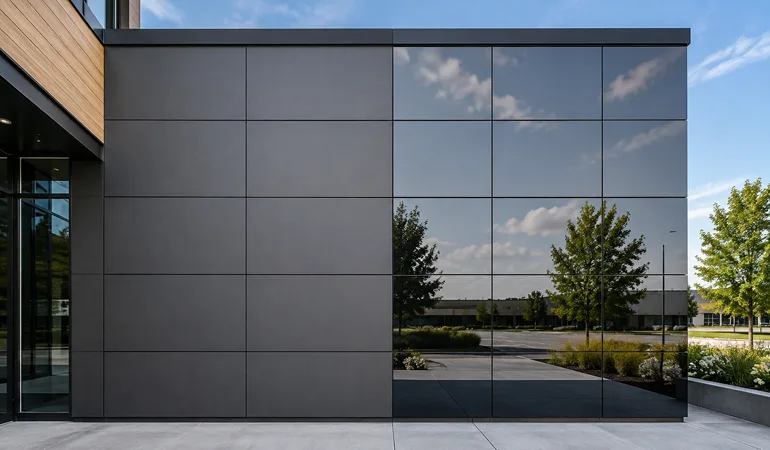
Aluminum composite material (ACM) panels have become one of the most popular cladding choices for commercial and residential exteriors across the GTA, and for good reason — they’re lightweight, durable, and available in a huge range of finishes. But once you’ve settled on ACM as your material, there’s a second decision that matters just as much for the long-term look of your building: matte or gloss?
It’s not just a style preference. The finish you choose affects how the panels weather, how much maintenance they need, and how they’ll look five, ten, or twenty years down the road. Here’s what property owners and builders should know before deciding.
Key Takeaways
- Matte finishes hide fingerprints, minor scratches, and weathering better than gloss over time.
- Gloss finishes deliver a sharper, more reflective look but show imperfections and UV fading more visibly.
- Sun exposure, building height, and climate all influence which finish performs best long-term.
- Both finishes can last decades with proper installation and routine cleaning.
What Sets Matte and Gloss ACM Panels Apart
Matte ACM panels have a low-sheen, non-reflective coating that gives buildings a softer, more modern appearance. Because the surface diffuses light instead of bouncing it back, matte panels tend to look more uniform even under changing weather and lighting conditions.
Gloss panels, on the other hand, have a polished, mirror-like coating that reflects light and creates a bold, high-end appearance. This reflectivity is striking on day one, but it’s also what makes gloss finishes more demanding to maintain as the building ages.
How Each Finish Performs Over Time
Long-term performance really comes down to how each finish handles UV exposure, dirt, and physical wear.
- UV resistance: Both finishes are typically coated with PVDF (polyvinylidene fluoride) resin, which resists fading, but gloss surfaces tend to show color shift and chalking more noticeably because the reflective surface highlights any inconsistency.
- Scratches and scuffs: Matte finishes are far more forgiving — light surface scratches blend into the texture. On gloss panels, even small scuffs catch the light and stand out.
- Fingerprints and smudges: Gloss panels show fingerprints and handprints almost immediately, which matters for entryways, storefronts, and anywhere people are in close contact with the cladding.
- Dirt and staining: Matte surfaces hide dust and grime buildup better between cleanings, while gloss panels show streaking more clearly after rain or snowmelt.
For buildings in Toronto’s climate — with freeze-thaw cycles, road salt spray, and seasonal grime — that difference in how visible wear becomes is often the deciding factor for property managers choosing between the two.
Maintenance Considerations
Neither finish is maintenance-free, but the cleaning schedule and technique can differ.
- Matte panels generally need a simple rinse-and-mild-detergent wash two to four times a year to stay looking fresh.
- Gloss panels often need more frequent cleaning to maintain that reflective shine, plus extra care to avoid streaking or micro-scratching from abrasive cloths.
- Both finishes benefit from professional cleaning on taller buildings, where uneven weathering (from rain patterns or shading) can create visible streaking if left unaddressed.
If your building is in a high-traffic or high-visibility location — a storefront, office lobby, or busy commercial strip — factoring maintenance frequency into your decision upfront can save on long-term upkeep costs.
Which Finish Fits Your Project
There’s no universal right answer — it depends on the building’s use, height, and exposure.
- Choose matte if: you want a low-maintenance, contemporary look that ages gracefully and hides everyday wear, especially on mid-rise or high-rise buildings where cleaning access is limited.
- Choose gloss if: you want a bold, premium storefront or feature wall and are prepared for more frequent cleaning to keep the reflective finish looking sharp.
- Consider a mixed approach: many commercial projects use gloss panels as accent features near entrances and matte panels across the broader façade for the best of both.
Climate and sun exposure matter too — south- and west-facing walls that get the most direct sunlight will show UV wear faster on either finish, so orientation is worth discussing with your contractor during planning. According to Natural Resources Canada, building envelope materials in Canadian climates face significant seasonal temperature swings, which is part of why properly rated PVDF coatings matter regardless of sheen level.
Getting the Right Finish for Your Building
Matte and gloss ACM panels are both proven, long-lasting cladding options — the right one comes down to how the building is used, how much reflectivity you want, and how much upkeep you’re willing to commit to. If you’re comparing options for a new build or a re-cladding project, our team can walk you through samples and help match the finish to your building’s exposure and maintenance plan.
BuildSky’s ACM panel installation team works with both matte and gloss systems across the GTA, and we also handle full exterior cladding upgrades for commercial and residential properties. For a broader look at material choices, check out our guide on choosing the right exterior cladding material, or explore our commercial renovation services if your ACM upgrade is part of a larger project. You can also learn more about the material itself on Wikipedia’s aluminum composite panel overview.
Ready to compare matte and gloss samples in person? Call BuildSky at (647) 818-4683 or visit us at 364 Supertest Rd Unit 205, North York, ON M3J 2M2 to get started.
